Precision 420 Stainless Steel CNC Machining Services
Balancing critical hardness, corrosion resistance, and dimensional integrity. At PRECI5, our comprehensive 420 stainless machining solutions span rough roughing in annealed condition to post-hardening precision CNC turning, 5-axis milling, and grinding up to 54 HRC.
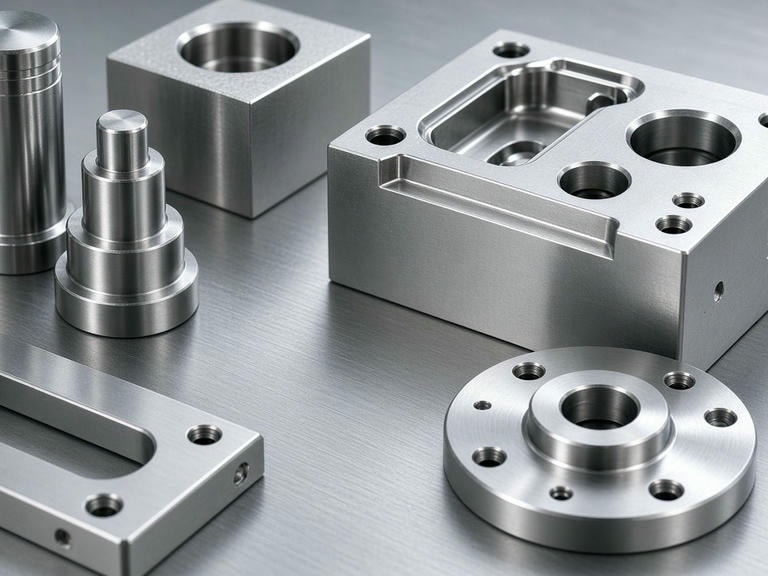
In-House Controlled Production: Annealed Roughing → Heat Treatment → Precision Grinding
AISI 420 Material Specifications & Mechanical States
Martensitic AISI 420 stainless steel responds distinctively to machining depending on thermal condition. To maintain strict process stability, cutting parameters and tooling strategies are isolated between annealed and hardened states.
| Mechanical Property | Condition: Annealed (Soft) | Condition: Hardened & Tempered | Machining Impact |
|---|---|---|---|
| Density | 7.74 g/cm³ | 7.74 g/cm³ | Stable mass calculations for dynamic balancing |
| Hardness | ≤ 200 HB | 50–54 HRC | Dictates carbide tooling grade vs. CBN/grinding selection |
| Tensile Strength | ~600–700 MPa | ~1500–1800 MPa | High cutting forces in hardened state require high-torque spindles |
| Yield Strength | ~300 MPa | ~1200+ MPa | Determines deflections during aggressive roughing operations |
| Primary Applications | Initial rough profiling, deep hogging | Valve trim, surgical blades, wear plates | Hardening unlocks wear and deformation resistance |
Fleet Capabilities for Tough Martensitic Stainless
Machining hardened 420 stainless steel demands high machine tool rigidity, anti-vibration tool setups, and dedicated finishing equipment. Our facility deploys Japanese machining centers optimized for tight tolerances.
Mazak C600 (8 Units)
Simultaneous multi-axis control handles complex 3D profiles in single setups, eliminating cumulative stacking errors on surgical and aerospace fixtures.
Mazak QTC100MY / QTE100
Rigid slant-bed turning centers with driven tooling for precision shafts, high-pressure valve needles, and concentric internal tapers in 420 stainless.
Okamoto & RGC Surface/OD
Secondary grinding operations bypass tool deflection constraints on 50–54 HRC components, guaranteeing mirror surface finishes and sub-micron flatness.
Rockwell & Vickers Testers
Rigorous core and surface microhardness validation post-heat treatment ensures every heat lot complies with ASTM specifications and client load requirements.
Integrated Process Control for Hardened 420 Components
Martensitic stainless steels undergo structural phase changes during hardening that can induce thermal stress and dimensional movement. We mitigate this through a systematic 3-stage protocol.
Annealed Roughing
Material removal in soft condition (≤200 HB) with calculated grinding allowances (+0.2mm to +0.4mm).
Vacuum Heat Treatment
Controlled austenitizing and tempering to reach target HRC without surface decarburization.
Precision Hard Finishing
Okamoto grinding and rigid CBN hard-turning to satisfy critical runout, concentricity, and Ra tolerances.
Engineering Quality Milestones
Rough cutting sequences balance stress relief before vacuum quenching, preventing warp or micro-fissuring in slender geometries like surgical tools and metering pins.
For high-pressure hydraulic valve seats, high-speed finish passes with tailored wiper inserts prevent tearing, chatter marks, or premature pitting under cyclic pressure.
Every production lot ships with certified material test reports (MTR) accompanied by Rockwell/Vickers hardness logs and CMM inspection records.
Industrial Applications for Machined 420 Stainless
Combining hardened martensite structure with nominal 12–14% chromium content makes 420 stainless the preferred alloy when standard austenitic grades (304/316) cannot deliver essential surface hardness.
DFM Support
Need recommendations on roughing allowances, heat treatment parameters, or grinding clearances? Our senior CNC engineers provide free DFM analysis within 24 hours.
Request DFM ReviewSend Your 420 Stainless Drawing & Heat Treatment Requirement
Submit 2D drawings (PDF/DWG) and 3D CAD models (STEP/IGES) along with targeted HRC ratings and surface finish expectations. Our application engineers will return a complete manufacturability assessment and competitive price quote.